

Thinking about installing solar but not sure where to start? The first step, a solar site assessment, is a comprehensive check of your property to design a system that fits your needs perfectly. This on-site evaluation, which typically takes between 60 to 90 minutes, involves a professional examining your roof’s suitability, analysing potential shading, reviewing your energy consumption patterns, and inspecting your electrical switchboard.
This makes sure the final solar system is safe, efficient, and provides the best possible value for your investment.
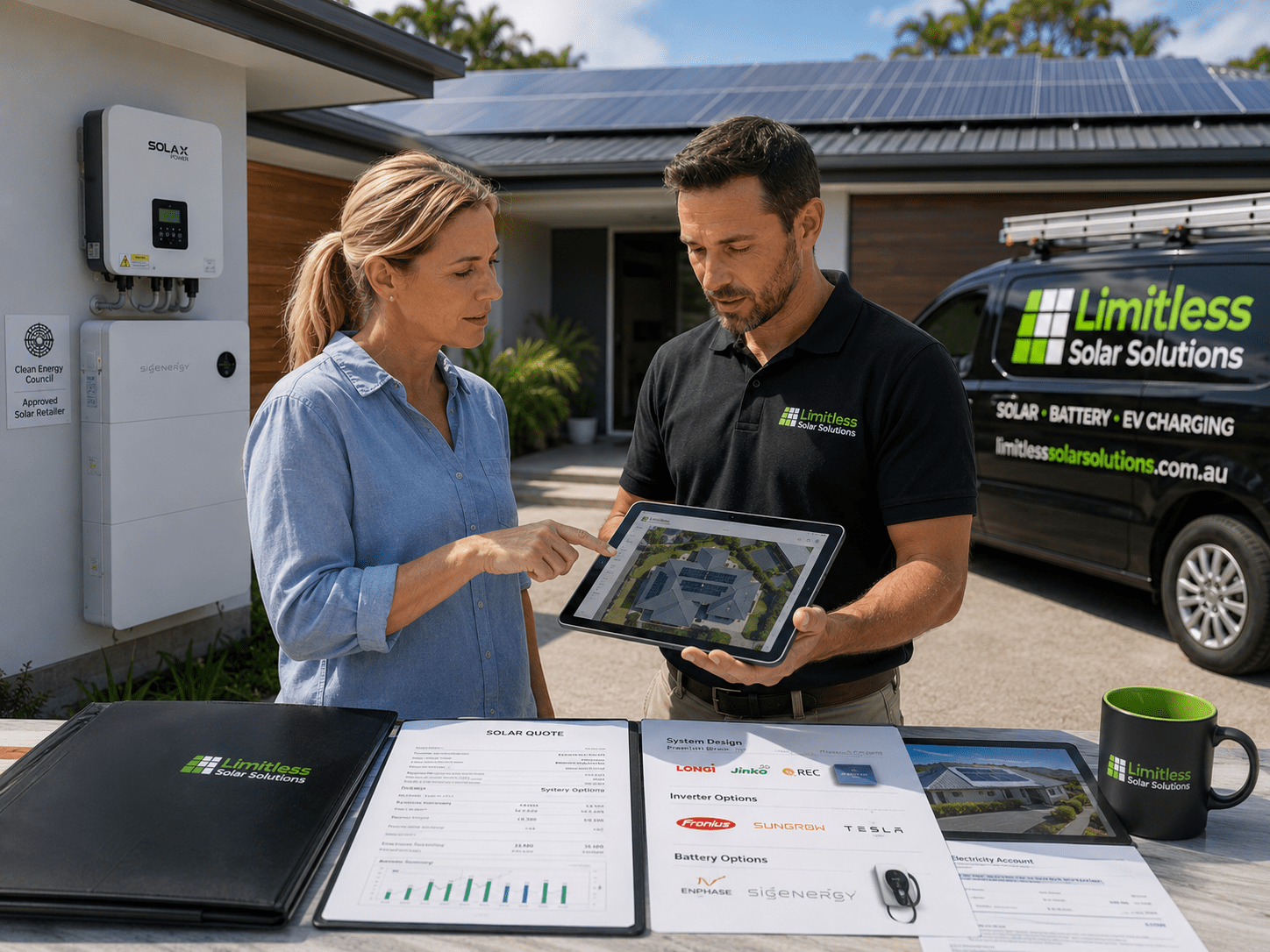
This process removes guesswork and provides a clear, data-backed plan for your home or business. It is the foundation for a successful transition to solar energy. Read on to discover exactly what happens during this important appointment.
Jump to section
- Key Takeaways
- What Is a Solar Site Assessment and Why Is It So Important for Your Home or Business?
- What Happens During Your Roof and Property Assessment?
- How Do Solar Experts Evaluate Your Energy Usage and Electricals?
- Planning for the Future: Batteries, EVs, and Beyond
- Understanding the Numbers: What About Costs and Savings?
- Getting Ready: How Can You Prepare for Your Solar Site Assessment?
- Ready for Cleaner Energy?
- Frequently Asked Questions
Key Takeaways
-
A solar site assessment is the essential first step for any successful solar installation, making sure a system is custom-designed for your specific property and needs.
-
It covers everything from your roof’s suitability to your home’s energy use, helping prevent any surprises later.
-
Limitless Solar Solutions provides a transparent and expert assessment process, helping you understand your solar potential and investment.
-
Preparing a few simple details beforehand can make your assessment even more efficient.
What Is a Solar Site Assessment and Why Is It So Important for Your Home or Business?
A solar site assessment is a detailed evaluation of your property to determine its suitability for a solar power system. It is a critical, non-negotiable step that makes sure the system you invest in is designed for optimal performance, safety, and financial return. This process moves beyond rough estimates to provide an accurate, custom-designed plan specifically for your home or business.
This thorough check helps avoid future problems like panels that don’t perform as expected or unexpected installation costs. For Queensland properties, a thorough assessment considers local weather patterns, council regulations, and network rules from providers like Energex. By accounting for these factors upfront, you can be confident that your system will get the most energy production and deliver the savings you expect.
Making the Solar Site Assessment Process Clear
A solar site assessment is a detailed evaluation of your property’s physical, electrical, and environmental characteristics. It is not just a quick look at your roof; it is a professional process designed to remove guesswork, reduce installation risks, and make sure your system generates the most clean energy possible. The process usually starts with a preliminary desktop analysis using satellite imagery to get a general idea of your property’s layout, a methodology supported by modeling site suitability for solar farms research in the United States.
However, the most important part is the physical on-site inspection. This is where a qualified expert verifies all the details in person, something that remote tools cannot do accurately. As a locally owned company serving the Sunshine Coast and North Brisbane, Limitless Solar Solutions highlights this thorough approach. Our SAA-accredited installers conduct these detailed checks to support your path to long-term energy independence and savings on a solid foundation.
“Investing in solar is a big decision for your home or business. A thorough site assessment confirms you have all the facts and a system designed just for you, giving you peace of mind.” — Energy Efficiency Expert
Why Is a Comprehensive Solar Assessment Essential for Queensland Properties?
You might wonder, “Why can’t I just get a quote over the phone?” The simple answer is that every property is different. A comprehensive solar assessment is essential because it identifies specific challenges and opportunities that a phone call or online tool would miss. This detailed inspection confirms your system is correctly sized for your energy needs, preventing the costly mistake of installing a system that is too big or too small.
A thorough evaluation identifies potential issues upfront, from a roof needing repairs to an outdated switchboard, preventing unexpected costs down the line — an approach supported by towards advanced sustainable criteria for urban solar site selection. It is also the key to getting the most from “self-consumption” which means designing a system that generates power when you need it most to offset high retail electricity rates. The local knowledge of Limitless Solar Solutions‘ installers means your system design will consider Queensland-specific conditions, including Energex requirements and coastal weather factors, leading to a better outcome.
What Happens During Your Roof and Property Assessment?
The physical inspection of your roof and property is a cornerstone of the solar site assessment. During this stage, an expert carefully evaluates your roof’s orientation, pitch, material, and structural integrity. This detailed examination determines the best and safest placement for solar panels to get the most sun exposure.
Furthermore, a sophisticated shading analysis is conducted to identify any trees, buildings, or other obstructions that could cast shadows on your roof at different times of the day and throughout the year. This information is critical for selecting the right technology, such as micro-inverters or power optimisers, to make sure your system performs well even if some panels are partially shaded.
Is Your Roof Suitable for Solar Panels: Orientation, Pitch, and Materials
The suitability of your roof is determined by several key factors. An assessor will look at its physical characteristics to plan for optimal panel placement and long-term system health, using multi-criteria approaches aligned with investigating land suitability for PV installations research.
-
Roof Orientation: In Queensland, a north-facing roof generally provides the highest overall energy yield. However, an expert from Limitless Solar Solutions will also assess east and west-facing roof spaces. A split array across these orientations can be highly effective for households with high energy use in the morning and afternoon, aligning power generation with peak consumption and Time-of-Use tariffs.
-
Roof Pitch (Angle): The angle of your roof influences how sunlight hits the panels. Most standard Queensland roof pitches are excellent for solar and also allow for self-cleaning during heavy rain. If you have a flat roof, the assessment will determine if tilt frames are needed to achieve a better angle for energy production.
-
Roofing Material and Condition: Your roof’s material, whether it’s Colorbond, terracotta, or concrete tiles, dictates the specific mounting hardware required for a secure and waterproof installation. The assessor will inspect the condition of the material, checking for any corrosion, cracked tiles, or signs of wear that need to be addressed. Different materials require different installation techniques to maintain roof integrity.
-
Structural Evaluation: Solar panels add weight to your roof structure, typically around 15-20kg per square metre. The assessment confirms your roof can safely support this additional load and withstand Queensland’s stormy weather. If the roof is older or has a complex design, Limitless Solar Solutions may advise consulting a qualified roofer or structural engineer.
How Do Experts Analyse Shading and Environmental Factors?
Shading is a primary enemy of solar production, so a detailed analysis is an important part of the solar site assessment. Even a small shadow on one panel can significantly reduce the output of an entire section of your system.
To avoid this problem, experts use specialised tools like solar pathfinders or drone mapping to create a 3D model of your property, consistent with evaluating solar power plant sites using integrated GIS methods. This maps the sun’s trajectory throughout the year, identifying any potential obstructions. The analysis accounts for hard shading from chimneys and neighbouring buildings, as well as soft shading from trees that may change with the seasons. A tree that is not an issue in summer might cast a long shadow during the lower winter sun.
Based on these findings, the assessor can make informed recommendations. If your roof has complex or unavoidable shading, Limitless Solar Solutions will suggest ways to reduce shade’s impact, using technologies like micro-inverters or DC power optimisers. These allow each panel to operate independently, so a shadow on one won’t affect how the others perform. The assessment also considers local coastal factors, recommending salt-mist corrosion-resistant panels for homes exposed to salt air.
How Do Solar Experts Evaluate Your Energy Usage and Electricals?
A successful solar site assessment goes beyond the roof to look at how you use power and the condition of your existing electrical system. A deep dive into your energy bills helps our experts design a system that is precisely sized to match your daily consumption patterns. This helps you get the most value out of every kilowatt of solar energy you generate.
Equally important is a thorough inspection of your electrical switchboard and wiring. This safety check confirms that your current setup follows Australian Standards and can handle the addition of a solar power system. It also identifies any upgrades that might be needed before the installation can go ahead safely.
Understanding Your Power Bill: Energy Consumption Profiling
To design a solar system that truly meets your needs, an assessor will analyse your past electricity bills and, if available, your smart meter data. This information is used to build an accurate daily load profile, revealing not just how much power you use, but when you use it. This helps distinguish between baseline loads, like your refrigerator’s constant draw, and variable loads from high-usage appliances like air conditioners or pool pumps. Understanding these patterns is key to maximising your solar savings.
For commercial clients, this analysis is even more detailed. It helps identify peak demand charges (measured in kVA) on your bill, which can be significantly reduced with a correctly designed solar system. The primary goal is to size a system for the most self-consumption, allowing you to use the solar power you generate directly. Limitless Solar Solutions uses this load profile data to prevent designing oversized systems that export low-value energy or undersized systems that leave you dependent on the grid.
“A quality solar system on the Sunshine Coast typically pays for itself in under four years, after which customers benefit from decades of significantly reduced energy costs.” — Limitless Solar Solutions
What About Your Switchboard and Electrical Setup?
A comprehensive electrical check is a non-negotiable part of any professional solar site assessment. An assessor will carefully inspect your Main Switchboard (MSB) to confirm it meets the current Australian Standards (AS/NZS 3000). Many older homes have outdated switchboards with ceramic fuses or asbestos-backed panels, which must be upgraded for safety before a solar system can be connected.
The assessment also determines if your property has a single-phase or three-phase power supply, as this dictates the maximum size of the solar inverter you can install. The expert will check for adequate physical space in the meter box for the new solar components and plan the safest and most aesthetically pleasing route for all the necessary cables. During the assessment, Limitless Solar Solutions will flag any required upgrades upfront, so you have a clear picture of the entire project scope with no hidden surprises.
Planning for the Future: Batteries, EVs, and Beyond
A forward-thinking solar site assessment doesn’t just look at your energy needs today; it helps you plan for tomorrow. As more households and businesses look to increase their energy independence, the assessment evaluates your property’s suitability for additions like battery storage and Electric Vehicle (EV) chargers.
This future-proofing approach makes sure that your solar system can grow. By considering these potential upgrades from the beginning, you can avoid costly and complicated retrofits later on. The assessment will identify the best locations for new equipment and confirm your electrical system can handle the increased load, making your transition to a more electrified future seamless.
Can You Add Battery Storage and How Will It Be Assessed?
With changing feed-in tariffs, many Queenslanders are looking to add battery storage to capture their excess solar energy. A site assessment will determine your property’s suitability for a battery, with a strong focus on safety and compliance. The Australian Standard for battery installation (AS/NZS 5139) has strict rules about placement, requiring specific clearances from windows, doors, and other heat sources.
During the visit, an assessor from Limitless Solar Solutions will identify an optimal location, whether it’s in a garage or on an external wall, considering factors like ventilation and protection from the elements. The assessment will also map out which circuits you want to back up during a power outage, such as your fridge and lights. This allows for the correct sizing of the battery to keep your essential loads running, which is especially valuable during Queensland’s storm season.
What Does an EV Charger Assessment Involve?
The growing popularity of electric vehicles is changing how we think about home energy. Adding an EV can nearly double a household’s electricity consumption, making it a key consideration during a solar site assessment. The process involves evaluating your switchboard’s capacity to handle the large, continuous electrical load of a Level 2 fast charger without overloading your system.
The assessment also explores the integration of “solar-aware” smart chargers. These devices can communicate with your solar inverter to charge your vehicle using only excess solar power, further increasing your self-consumption and savings. Limitless Solar Solutions designs systems with this future growth in mind. We will plan the most efficient cable pathways to your garage or carport and recommend a solar array size that can accommodate your driving patterns, so your car runs on sunshine.
Understanding the Numbers: What About Costs and Savings?
Once the technical evaluation is complete, the solar site assessment translates all the collected data into a clear financial picture. This part of the process is designed to give you a transparent understanding of the investment, including the projected energy savings, payback period, and long-term return. It takes the guesswork out of the financial side of going solar.
The assessment also makes sure you understand all applicable government rebates and incentives you are eligible for. By combining technical accuracy with financial clarity, you can make a confident and informed decision about your energy future. Limitless Solar Solutions prioritises this transparency so you know exactly what to expect.
How Are Your Potential Savings and ROI Calculated?
Using advanced software, the data gathered from your property is used to simulate your proposed system’s performance for every hour of the year. This generates a realistic estimate of the total kilowatt-hours (kWh) your system will produce annually. This is not just a generic estimate; it is a projection based on your roof, your shading, and your specific location.
This performance data is then used to calculate your financial return. The proposal you receive will detail the expected reduction in your quarterly power bills, factoring in your current electricity tariff and the feed-in tariff you will receive for any excess energy sent to the grid. Limitless Solar Solutions gives a clear picture of the payback period, which is typically 3-5 years in South East Queensland, and the total savings you can expect over the 25-year lifespan of the panels.
“A transparent quote process is a core value. We make sure all foreseeable costs are included, and any potential additional costs are discussed openly before any work is booked.” — Limitless Solar Solutions
What Government Rebates and Incentives Are Available?
Navigating government incentives can seem complex, but the solar site assessment process simplifies it for you. The main incentive for residential and small commercial systems is the federal Small-scale Renewable Energy Scheme (SRES). This provides an upfront discount on your system through the creation of Small-scale Technology Certificates (STCs). The number of STCs is calculated based on your system size and location.
The assessment confirms that all proposed equipment and the installation plan meet the strict Clean Energy Council (CEC) guidelines, which is a mandatory requirement for claiming any rebates. When you receive your quote from Limitless Solar Solutions, the STC discount will already be applied, showing you the final out-of-pocket cost. We manage the entire rebate process on your behalf, making it simple and hassle-free.
Getting Ready: How Can You Prepare for Your Solar Site Assessment?
To make your solar site assessment as smooth and efficient as possible, there are a few simple things you can do to prepare. By gathering some basic information beforehand, you help the assessor get a clearer understanding of your needs and goals right from the start.
Confirming the assessor has clear access to key areas of your property is also very helpful. This lets them perform a thorough and accurate evaluation without any delays. A little preparation goes a long way in helping us design the perfect solar system for you.
A Simple Checklist for Your Assessment Day
-
Have your recent electricity bills handy. Having 12 months of bills allows the assessor to see your seasonal usage patterns.
-
Think about your energy goals. Are you aiming to eliminate your bill, gain backup power, or prepare for an EV?
-
Note down any future plans. Let the assessor know if you are planning a renovation, adding a pool, or buying an electric vehicle.
-
Confirm clear access. Make sure the path to your main switchboard and any roof access points is clear.
-
Consider your aesthetic preferences. If you have any concerns about how the panels will look, this is the perfect time to discuss them.
What to Expect From Your Limitless Solar Solutions Assessment
When you book an assessment with Limitless Solar Solutions, a friendly, SAA-accredited expert will visit your Sunshine Coast or North Brisbane property at the scheduled time. They will walk you through each step of the evaluation, clearly explaining what they are looking for and why it is important for your system’s design.
This is your opportunity to ask any questions and discuss your specific needs and concerns in detail. Following the visit, you will receive a comprehensive and transparent quote with no hidden fees. We will also discuss practical approaches for any “imperfect” roofs, such as split arrays or shade mitigation technologies, to make sure almost any property can benefit from solar.
Ready for Cleaner Energy?
A thorough solar site assessment is the foundation of a successful and cost-effective solar process. It makes sure you receive a customised system that addresses your specific energy needs, maximises your savings, and provides reliable, clean power for decades to come.
If you’re ready to take control of your energy bills, contact Limitless Solar Solutions today. Our expert team is here to provide a personalised, no-obligation solar site assessment for your home or business on the Sunshine Coast or in North Brisbane.
Frequently Asked Questions
Question: How long does a typical solar site assessment take?
A standard residential solar site assessment usually takes between 60 and 90 minutes. The duration can vary depending on the size and complexity of your property. This allows our expert enough time to conduct a thorough inspection of your roof and electrical systems, and to discuss your energy goals with you in detail.
Question: Do I need to be present for the entire solar site assessment?
Yes, it is highly recommended that you are present for the assessment. Your presence allows the assessor to ask important questions about your energy usage patterns and future plans, such as adding a battery or an EV. It also gives you the opportunity to ask questions and make sure all your concerns are addressed directly.
Question: What if my roof isn’t ideal for solar (e.g., too much shade, not north-facing)?
Many properties have challenges, but modern solar technology offers excellent options. During the assessment, we can recommend approaches like east/west split arrays to capture morning and afternoon sun, or shade mitigation technologies like micro-inverters that allow panels to perform independently. Limitless Solar Solutions is skilled at designing effective systems for almost any roof.
Question: Will a solar system increase my property’s value?
Yes, studies have shown that a quality solar power system is a valuable upgrade that can increase a property’s market value. Lower energy bills are a very attractive feature for potential buyers. A professionally installed system from an SAA-accredited installer like Limitless Solar Solutions adds significant appeal and shows a commitment to modern, sustainable living.
Question: What happens after the solar site assessment is completed?
After the assessment, you will receive a comprehensive proposal from Limitless Solar Solutions. This document will include the detailed system design, an itemised quote, projected savings, payback period, and information on all applicable rebates. We will go through the proposal with you to answer any questions before moving forward with approvals and scheduling your installation.